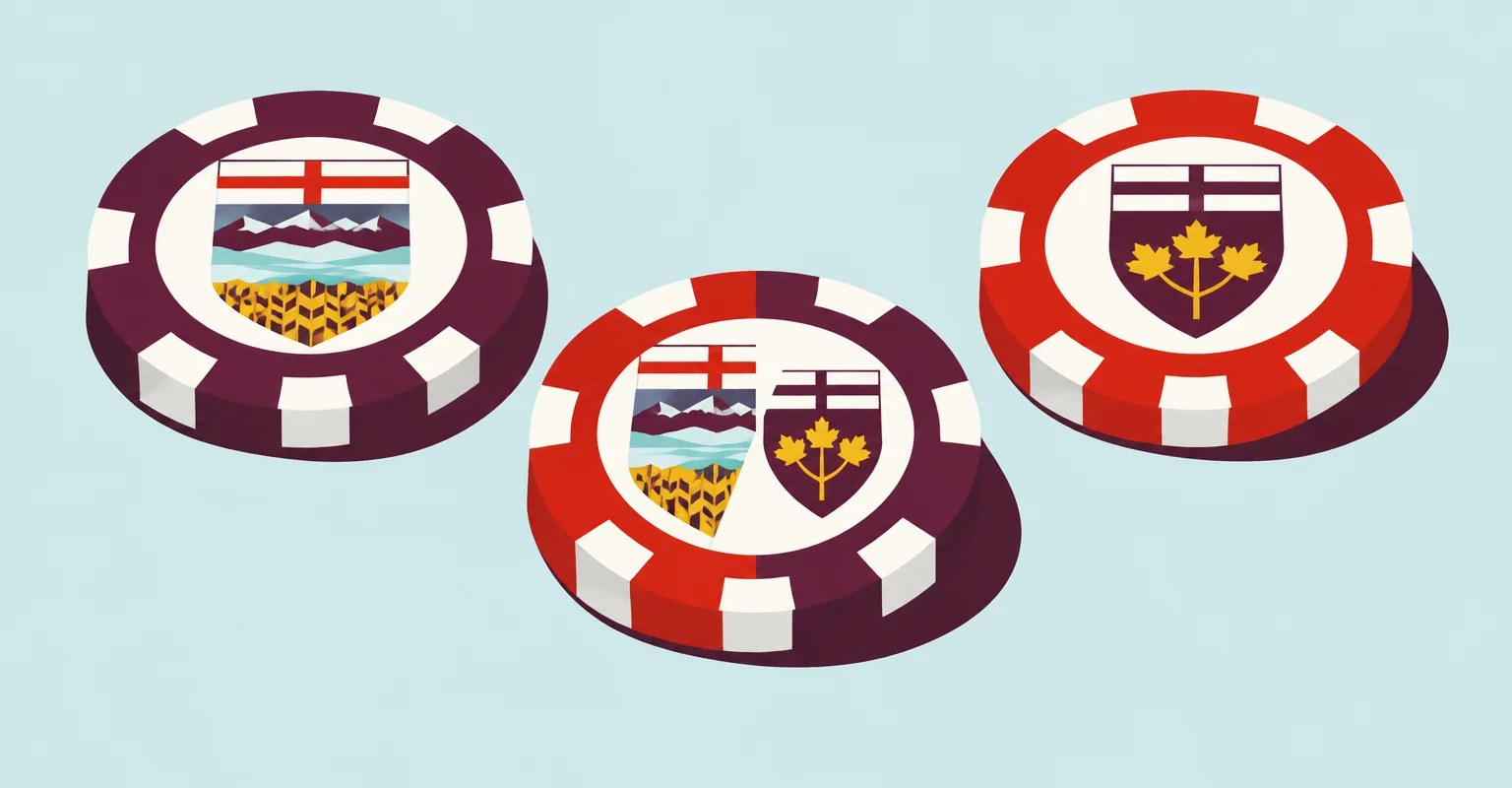
888poker has begun planning for an Alberta launch and says any regulated online poker rollout will probably depend on Alberta securing shared liquidity with Ontario.
A report by pokerfuse said Alberta’s regulated iGaming market opens on July 13, allowing licensed international operators to offer online casino games, sports betting, fantasy sports and poker. More than 50 operators and over 50 suppliers had already completed registration with the Alberta Gaming, Liquor and Cannabis regulator, including 888, FanDuel, BetMGM and BetRivers.
Even so, Albertans are unlikely to see regulated online poker on day one. The report says Alberta’s roughly 5 million people are too few to sustain a ring-fenced poker network on their own, and there is little commercial incentive to launch until operators can combine the province’s player pool with another regulated market.
The most practical outcome, according to the report, is an Alberta-Ontario shared liquidity agreement that would create a single regulated player pool across both provinces. On that basis, the combined addressable base would exceed 21 million players.
Alberta iGaming Corporation chief executive Dan Keene said the agency is working on a memorandum of understanding with Ontario on interprovincial liquidity. “We’re currently working on a memorandum of understanding (MOU) with Ontario about interprovincial liquidity,” he said, adding that the two sides would try to complete it “as quickly as we can with our friends in Ontario.”
888poker said shared liquidity sits at the centre of its Alberta strategy. “We are hopeful that Alberta will support shared liquidity with Ontario, which will create the best possible player experience and a healthy poker ecosystem,” the company said.
The company already operates in Ontario, where player liquidity is restricted to people physically located within the province. The report says expanding that pool to include Alberta would strengthen traffic for 888 and for other regulated poker operators.
No operator had publicly commented on Alberta poker plans before 888poker, the report said. NSUS-owned GGPoker was a notable absence from the registration list, though the report suggested timing and its Ontario approach may help explain that.
The legal backdrop remains unsettled on international liquidity. Ontario’s highest court last year ruled that such liquidity would be lawful if Ontario remained the entity “conducting and managing” the gaming operation, and the case has since been appealed to the Supreme Court of Canada.
The report described that ruling as one of the most important legal victories for regulated online poker in Canada because it removed a major obstacle to reconnecting provincial markets with international player pools. It also said Ontario had shown interest in returning to international liquidity, but had previously hesitated because of uncertainty over whether cross-border peer-to-peer poker complied with Canada’s Criminal Code.
The Alberta Gaming, Liquor and Cannabis regulator said it has not yet decided whether peer-to-peer games involving players outside Canada will be allowed. “No determination has been made at this time regarding the permissibility of peer-to-peer games involving players located outside of Canada,” it said, adding that any future position will depend on legal authority, regulatory oversight, operational controls and player-protection requirements.
Until shared liquidity is settled, the report says Albertans are expected to keep using offshore platforms during the three-month transition period, with operators that can show a clear path to compliance allowed to continue serving customers until October 13.