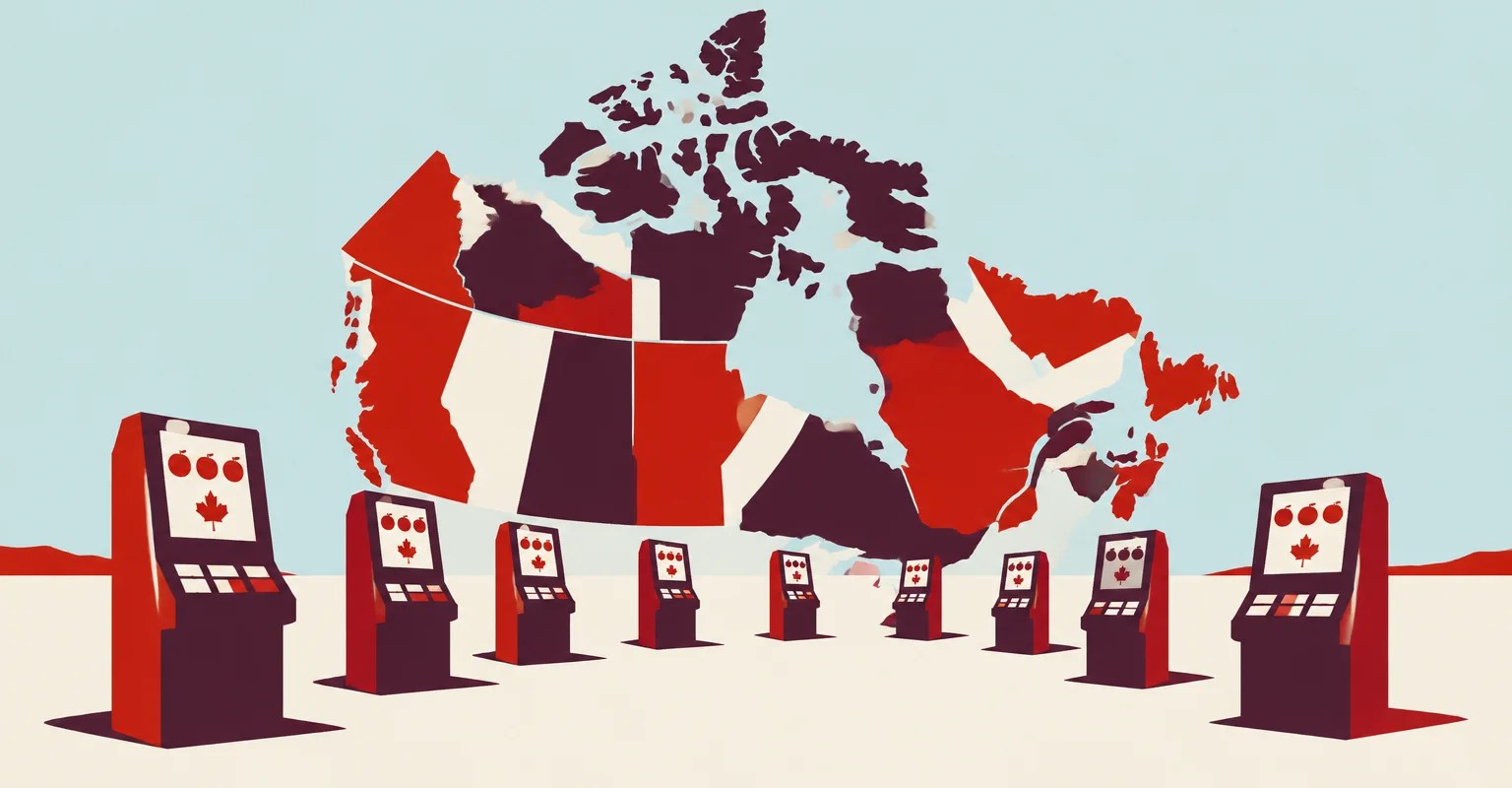
Canada’s self-exclusion system stops at provincial borders, leaving people who shut themselves out in one province able to bet in another or on overseas sites. The research says there is no single nationwide way for a player to exclude themselves from gambling.
CasinoCanada’s analysis says gambling is run province by province, with 10 separate regimes and no national regulator to connect them. It says Canada is the world’s third-largest online gambling market and estimates the market at CAD 13.15 billion in 2025.
The report says that fragmentation is helping send players toward sites outside Canadian rules. Offshore leakage outside Ontario is estimated at 49% in British Columbia, 88% in Alberta and Manitoba, and 93% in Saskatchewan.
Offshore platforms grew 40% year on year in 2025, the analysis says, compared with 23% growth for licensed, regulated operators. That gap suggests the country’s regulated market is expanding, but not fast enough to contain the offshore pull in much of the country.
Ontario is the clearest exception in the numbers the report cites. It says 91.1% of play stays within regulated sites, Ontario has 1.235 million active player accounts, and the province’s new BetGuard self-exclusion tool drew more than 500 sign-ups in its first two weeks.
The human cost is already visible in helpline data. A January 2026 study in the Canadian Medical Association Journal found gambling-related contacts to Ontario’s ConnexOntario helpline rose an estimated 198% after the market opened in 2022, concentrated almost entirely among boys and men aged 15 to 44.
Eugene Ravdin, CasinoCanada’s head of PR, said record wagers and a near-200% rise in helpline contacts were happening at the same time, which showed market growth and player protection were not the same thing. He said tools such as GAMSTOP, Spelpaus and BetStop let a person block themselves from every licensed site with one sign-up, while Canada has nothing similar.
The wider policy backdrop is longstanding. CAMH’s gambling policy framework says the Criminal Code gives provincial governments the exclusive authority to conduct and manage gambling activities, while the federal government determines the forms of gambling that are allowed. It also says gambling-related harms can reach families and communities even when someone does not have a gambling disorder.
CAMH says Ontario’s measures have tended to focus on individual actions rather than environmental risk factors, such as exposure to gambling and the form gambling takes. Its framework recommends moving from a responsible-gambling model to a public health approach.
A 2021 GREO evidence brief found one weakness of self-exclusion programmes is that they do not stop people gambling on other websites. A 2022 Frontiers in Psychiatry abstract said self-exclusion may help individual gamblers, but does not appear capable of significantly reducing gambling harm at the population level.